Long-Term Patterns of Treat Consumption
Longitudinal insights into discretionary food consumption and energy balance over time
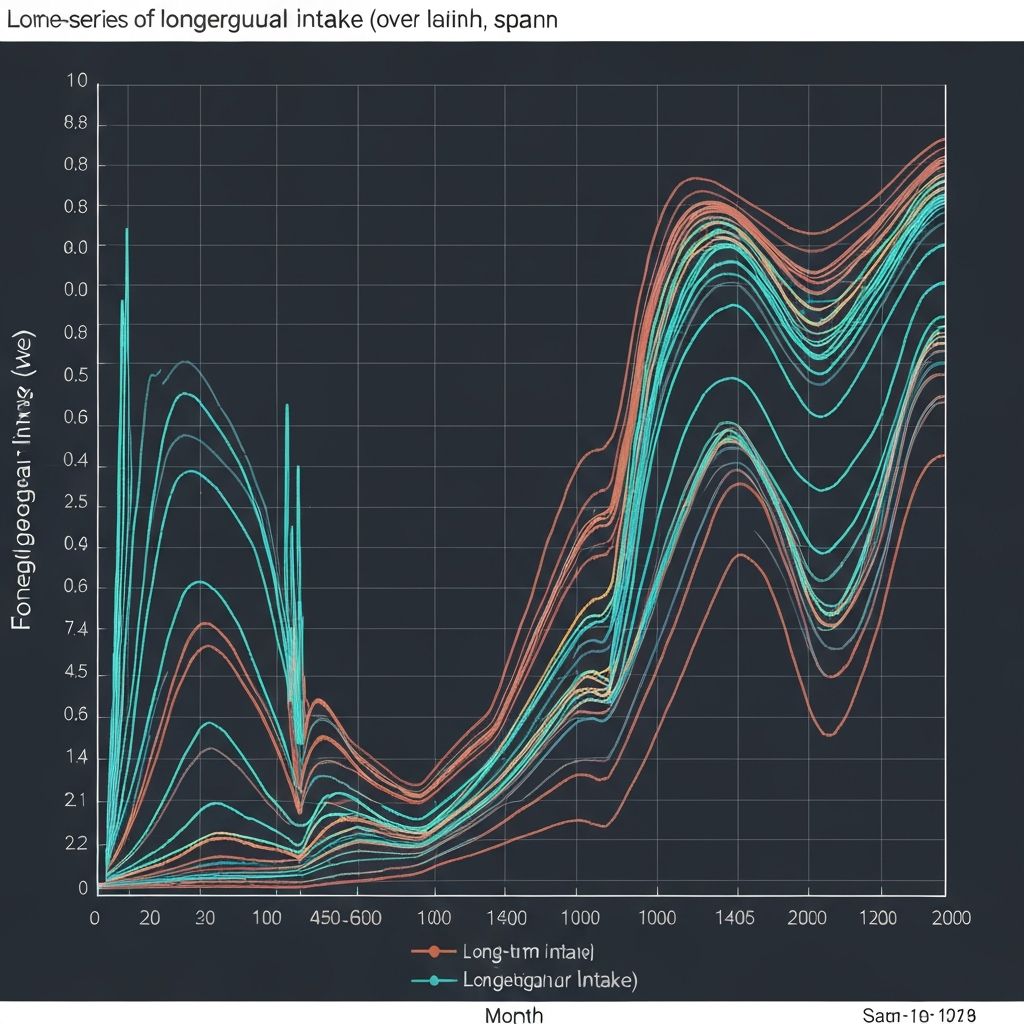
Longitudinal Research Perspectives
Long-term studies tracking eating patterns and energy intake over months or years provide insights into how discretionary food consumption evolves and affects energy balance and body weight over extended periods. These studies move beyond single-meal or single-day observations to examine patterns as they unfold in real-world contexts.
Longitudinal research documents substantial individual variation in how discretionary food consumption patterns change over time. Some individuals show stable patterns; others show progressive changes. Understanding these patterns helps contextualise how short-term intake variations accumulate into long-term weight and energy balance outcomes.
Stability and Change in Treat Consumption
Research examining eating behaviours and food preferences over years documents that discretionary food consumption patterns show moderate stability. Individuals who consume high amounts of treats at baseline tend to consume higher amounts at follow-up; similarly, those with low treat consumption at baseline tend to remain lower in subsequent measurement.
However, this stability is not absolute. Significant changes occur for many individuals, particularly in response to deliberate dietary changes, life circumstances, or environmental modifications. A person moving to a different food environment, changing employment, or experiencing major life changes may show substantial shifts in treat consumption patterns.
The moderate stability of these patterns suggests that treat consumption habits, once established, tend to persist unless actively modified. This has implications for long-term energy balance and body weight trajectories.
Energy Balance Drift Over Time
Long-term studies document that small daily energy imbalances—even modest daily surpluses of 50–150 calories—accumulate substantially over months and years. A consistent daily surplus of 100 calories accumulates to approximately 36,500 calories annually, equivalent to roughly 10 pounds of body weight gain per year.
Discretionary food consumption patterns that result in modest daily energy surpluses thus produce substantial long-term weight gain. Conversely, energy deficits from reduced discretionary food consumption accumulate to substantial weight loss over time.
This mathematical reality emphasises why even seemingly modest changes in discretionary food consumption—reducing frequent small treats—can produce meaningful long-term weight changes when compounded over years.
Intervention and Maintenance Patterns
Research examining weight loss interventions and subsequent weight maintenance reveals that changes in discretionary food consumption are frequently central to weight loss success. Individuals who successfully lose weight typically reduce treat consumption substantially during the weight loss phase.
However, maintenance of weight loss is often challenging. Studies document that many individuals regain weight after successful loss, often through progressive increases in treat consumption. The patterns that worked during active weight loss may be difficult to maintain indefinitely, particularly if psychological or environmental factors change.
Long-term weight loss maintenance often requires sustained modification of discretionary food consumption patterns. Individuals who regain weight frequently report that treat consumption gradually increased over the maintenance period until it approached pre-weight-loss levels.
Seasonal and Contextual Variations
Longitudinal studies document seasonal variations in discretionary food consumption patterns, with typically higher consumption during autumn and winter months (associated with holiday periods and comfort eating) and somewhat lower consumption during spring and summer. These seasonal patterns vary by geography and cultural context.
Additionally, longitudinal tracking reveals that discretionary food consumption patterns respond to contextual changes—work stress, relationship changes, relocations—sometimes increasing and sometimes decreasing. These contextual effects are superimposed on baseline individual patterns, creating complex long-term trajectories.
Understanding these contextual influences helps explain why long-term patterns are not perfectly predictable from baseline individual characteristics; changing life circumstances alter eating patterns in complex ways.
Habituation and Adaptation in Long-Term Consumption
Over long time periods, people's hedonic responses to specific treats change through habituation. A treat that initially produced strong pleasure may, with repeated exposure, produce diminished pleasure. This adaptation can result in either reduced consumption (as the treat becomes less desirable) or increased consumption (as the person seeks greater quantities to achieve the same hedonic response).
Individual variation in these adaptation responses is substantial. Some people naturally consume less of a habitual treat as pleasure diminishes; others increase consumption seeking to recapture initial pleasure. These individual differences in habituation and adaptation contribute to long-term variation in treat consumption patterns.
Health Trajectories and Long-Term Outcomes
Long-term studies linking discretionary food consumption to health outcomes (body weight, metabolic markers, disease incidence) document associations between sustained high treat consumption and adverse long-term health trajectories. However, again, these are observational associations and do not establish causality in individual cases.
Nevertheless, the consistency of associations across numerous populations and decades of follow-up suggests meaningful relationships. Populations with sustained high discretionary food consumption show higher average body weights, higher prevalence of obesity, and higher rates of associated metabolic conditions.
Conversely, populations that reduce discretionary food consumption and maintain that reduction show favourable long-term health trajectories. This again suggests that sustained changes in treat consumption patterns have meaningful long-term implications for health outcomes.
Individual Trajectories and Variability
Despite population-level patterns, substantial individual variation exists in long-term outcomes. Some individuals maintain high discretionary food consumption throughout life without substantial weight gain (though body composition and metabolic effects may not be identical to those with lower consumption). Others show progressive weight gain even with relatively modest treat consumption.
This individual variation results from multiple factors: genetic influences on metabolism and satiety, physical activity patterns, other dietary components, and environmental circumstances. Understanding population patterns does not permit prediction of individual outcomes with precision.